Vacuum tubes are shockingly durable. They get hastily pulled off stage, loaded into tour buses, trailers, back seats, and then rattled about for thousands of miles on end without fail. They’ve taken us to the moon and back. In the same breath if you don’t treat them right, they’ll leave you hanging.
The first question we inevitably get is “should you wear gloves when handling vacuum tubes?” The short answer is no. With all commonly used vacuum tubes in the guitar and audio industries the tubes are designed to be handled with *clean* bare hands.
Removing and installing tubes is generally very straightforward. All your commonly used tubes simply push or pull straight into and out of the socket. If the sockets are properly tensioned, they will grip the tube pins snuggly. So much so that you may find it necessary to gently rock the tube back and forth to get it fully seated or removed. This can take a little finesse but after handling a few tubes it’s easy to get the feel of. Take care not to rock the tube overly so (10-15 degrees max is all that’s necessary) or you risk snapping a guide pin on Octal based tubes or cracking the glass on Noval/9-pin tubes.
If you’re working inside of a compact space It’s a good idea to cup one hand over the top of a power tube when pulling it out so that when it lets loose you don’t smack the tube against the cabinet and break it!
Cleaning and Re-Tensioning sockets is often necessary when replacing tubes. Especially if you’re dealing with a vintage amp or an amp that has not been serviced in a long time. Even amps that are brand new right off the showroom floor can exhibit symptoms related to dirty or poor socket contacts. These symptoms can be static or crackly type noise, red plating or run-away power tubes, volume fluctuations, and many other performance related issues.
Cleaning tube sockets is generally a very simple process. To a certain extent tube sockets are self-cleaning in the sense that every time you go through the tube removal/install cycle the tube pins effectively “scrape” a clean connection into the socket contacts and everything is happy. If you’ve ever watched a seasoned tech install tubes you’ll often observe that out of habit they install the new tube, remove it, and then re-install the tube. This simple act of working the tube in and out of its socket helps ensure that a fresh/clean contact has been scraped into the receptacles.
However even a little bit of residual oxidization or contamination on the pins or socket contacts can lead to noise, or worse. Because of this we recommend applying a small amount of electronics specific contact cleaner directly to the tube pins, and then working the tubes in and out of their sockets a few times. This will ensure a clean contact between the tubes and sockets which provides the lowest noise floor and best overall performance. Our preferred brand of contact cleaner is DeOxit D5 manufactured by Caig.
Re-tensioning tube sockets is often necessary when working on vintage gear, gear with low quality sockets, or in cases where tubes with blobs of solder on the pins have been previously installed. There are several styles of pin receptacles. Most of them can be re-tensioned. Before we proceed please keep in mind that re-tensioning sockets requires sticking a sharp, typically conductive tool into the socket contacts where high voltages and currents would normally be transferred to the tube. Your amplifier must be turned off, unplugged from the wall, and fully discharged before making contact with any of the socket terminals. Most modern amps have provisions to bleed down the voltage in the power supply once the amp is turned off. Many vintage amps do not. If you’re unsure you can check for DC voltage on any pin (measuring from the socket terminals to chassis ground) with a multimeter. Everything should be drained down to under a volt or two before proceeding. If higher voltages are present do not continue.
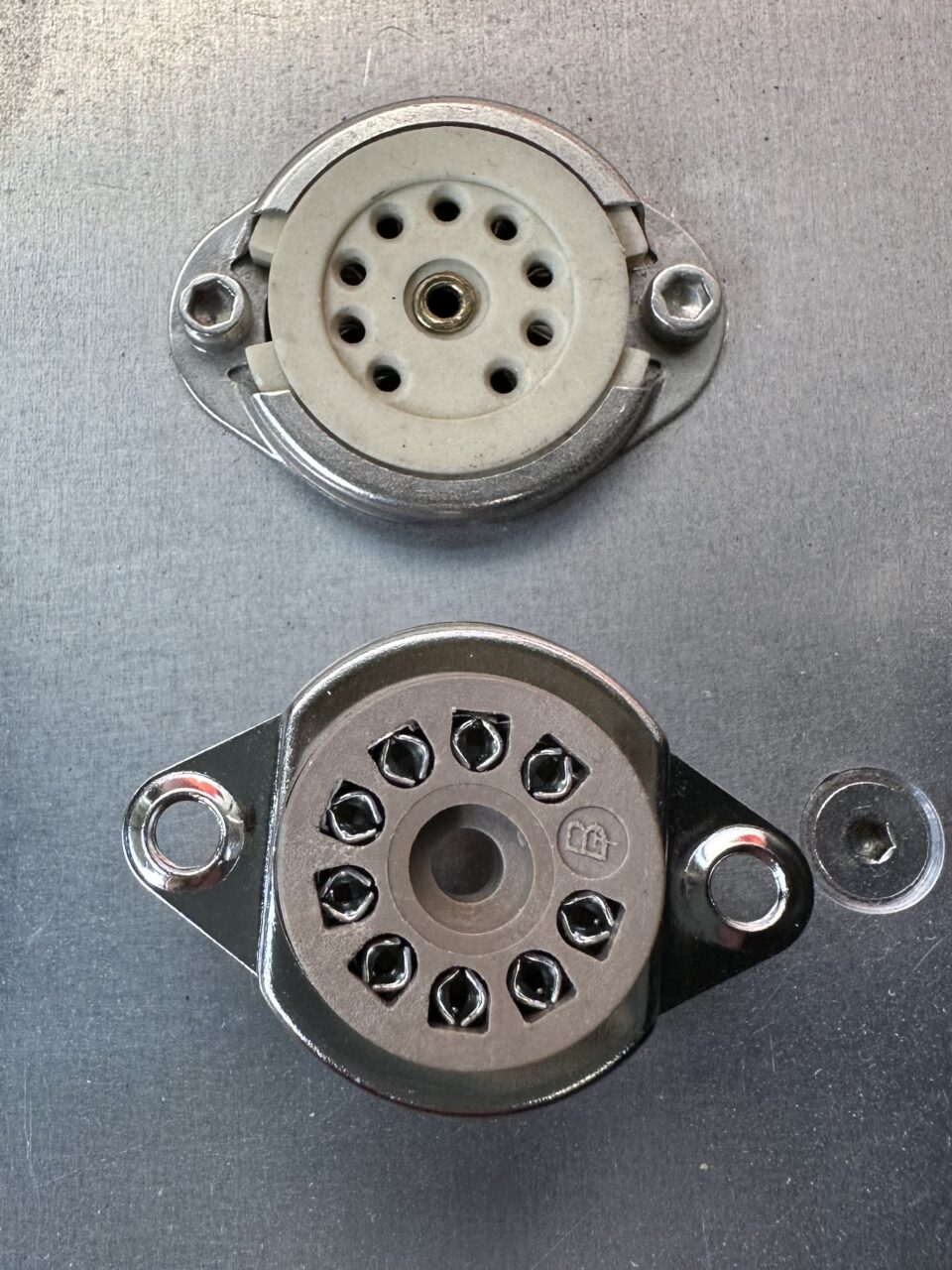
There are a variety of different socket terminals. Most terminals can be accessed externally for the purpose of re-tensioning. However not all sockets have fully exposed contacts. In the pic below you can see a Belton Micalex novel socket next to a classic ceramic socket with “hidden” contacts. Sockets with hidden contacts cannot be re-tensioned and should be replaced as necessary.
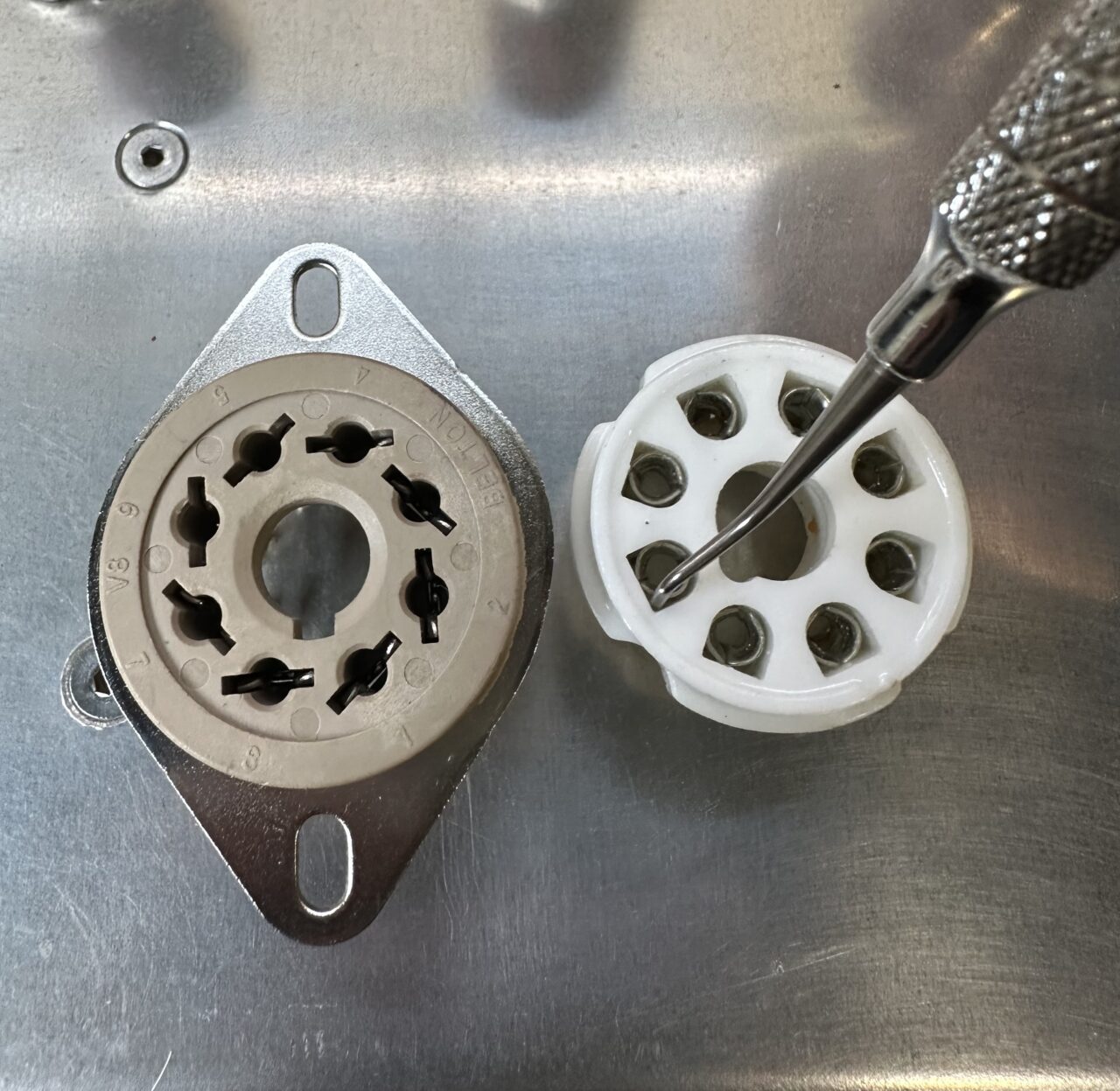
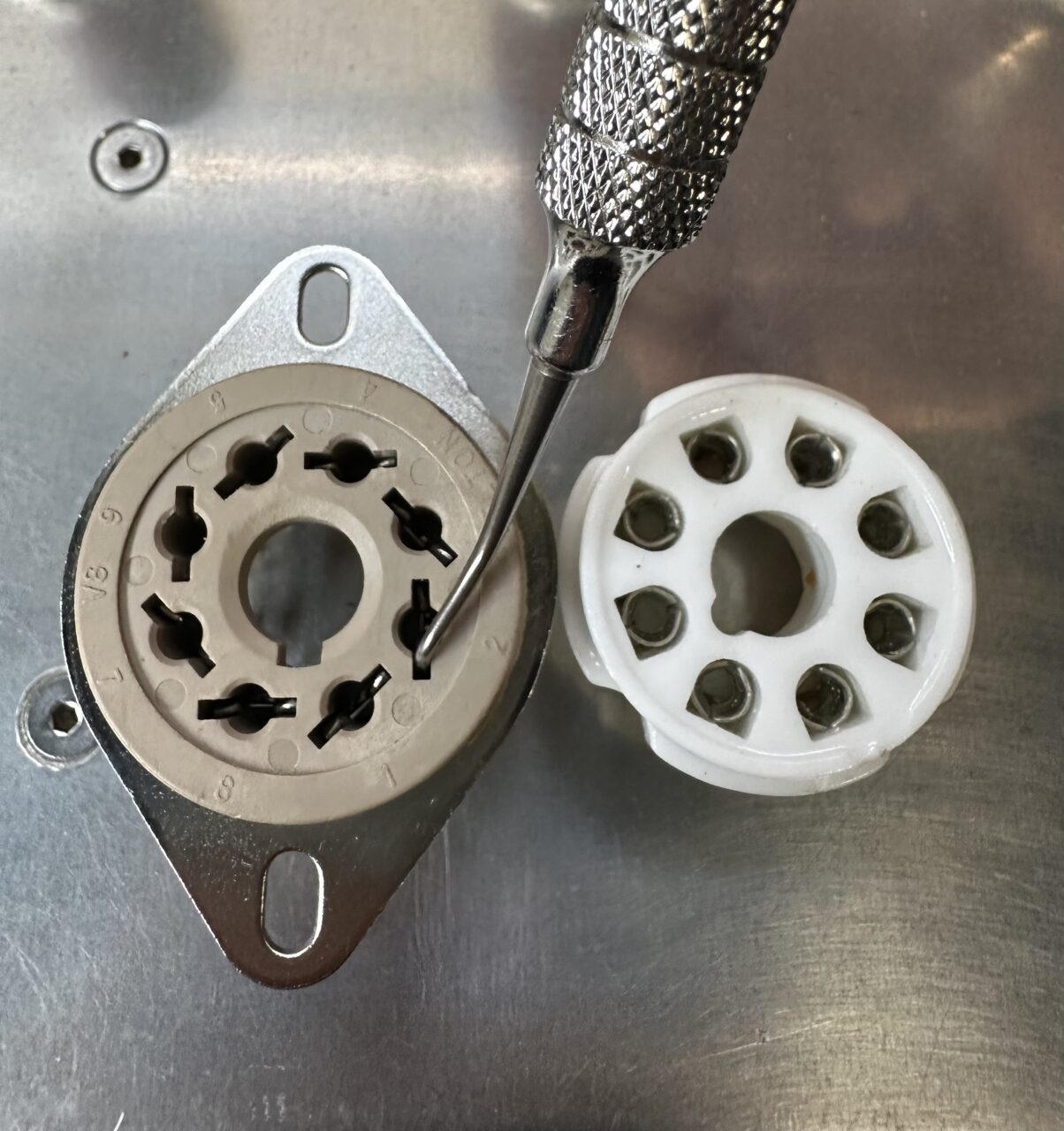
Our favorite tool for re-tensioning sockets is a dental pick. You can use the dental pick to gently leverage the terminal contacts towards the centerline of the receptacle. See the pics below. When the receptacles are properly tensioned the tube should require a fair amount of effort to insert or remove from the socket. Keep in mind many sockets have receptacles that float inside the socket body itself. With these types even when the socket is properly tensioned you’ll still feel tube “float” side to side, but the insertion and removal tension should be tight and require some effort.